ServicesTile Roofing
Tile Roofing in Los Alamitos
Concrete and clay tile can outlast the layers beneath it. We find out what is happening under your tile, then repair it, relay it over new underlayment and flashing, or install a new tile roof. You get a written answer before any work starts.
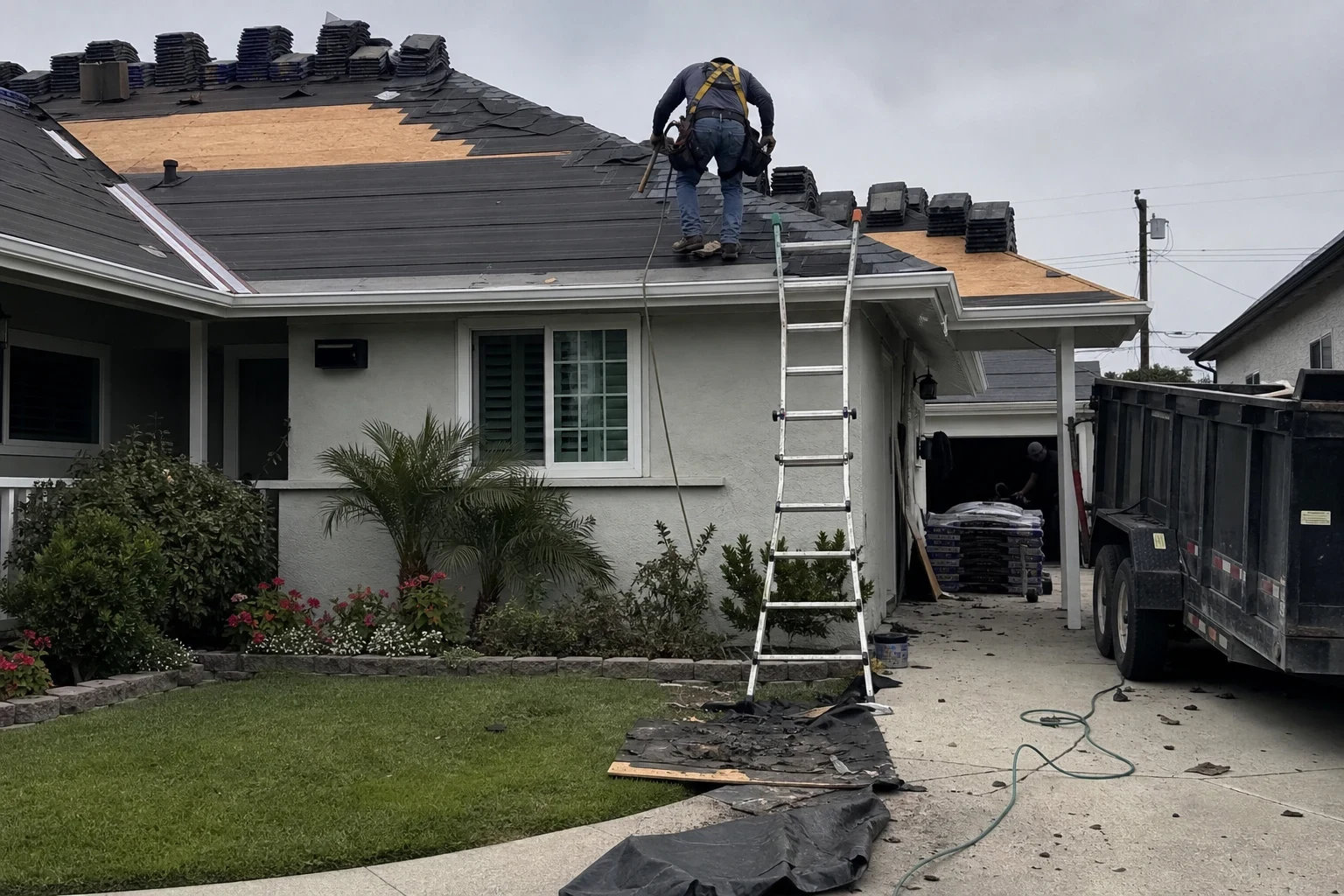
The Tile Sheds Water. The Underlayment Stops It.
Tile itself rarely wears out. What fails is underneath: the felt or synthetic underlayment that forms the real waterproof layer, the wood battens the tiles hang on, and the metal flashing at walls, valleys and vents. Tile turns away most of the rain, but wind-driven water always gets past some of it, and the underlayment has to carry that water to the gutter.
Many tile roofs around Los Alamitos, Rossmoor and Cypress went on decades ago over a single layer of 30-pound felt. Years of summer heat trapped under the tile dry that felt out until it cracks at every nail hole. From the street the roof looks fine. That is why much of our tile work is a lift and relay: we take the tiles off, replace the underlayment and flashing, and set the same tile back down.
We also replace broken tile, rebuild hip and ridge lines, and install new tile roofs. If you are weighing tile against shingle, our Asphalt Shingle Roofing page covers the other side of that choice.
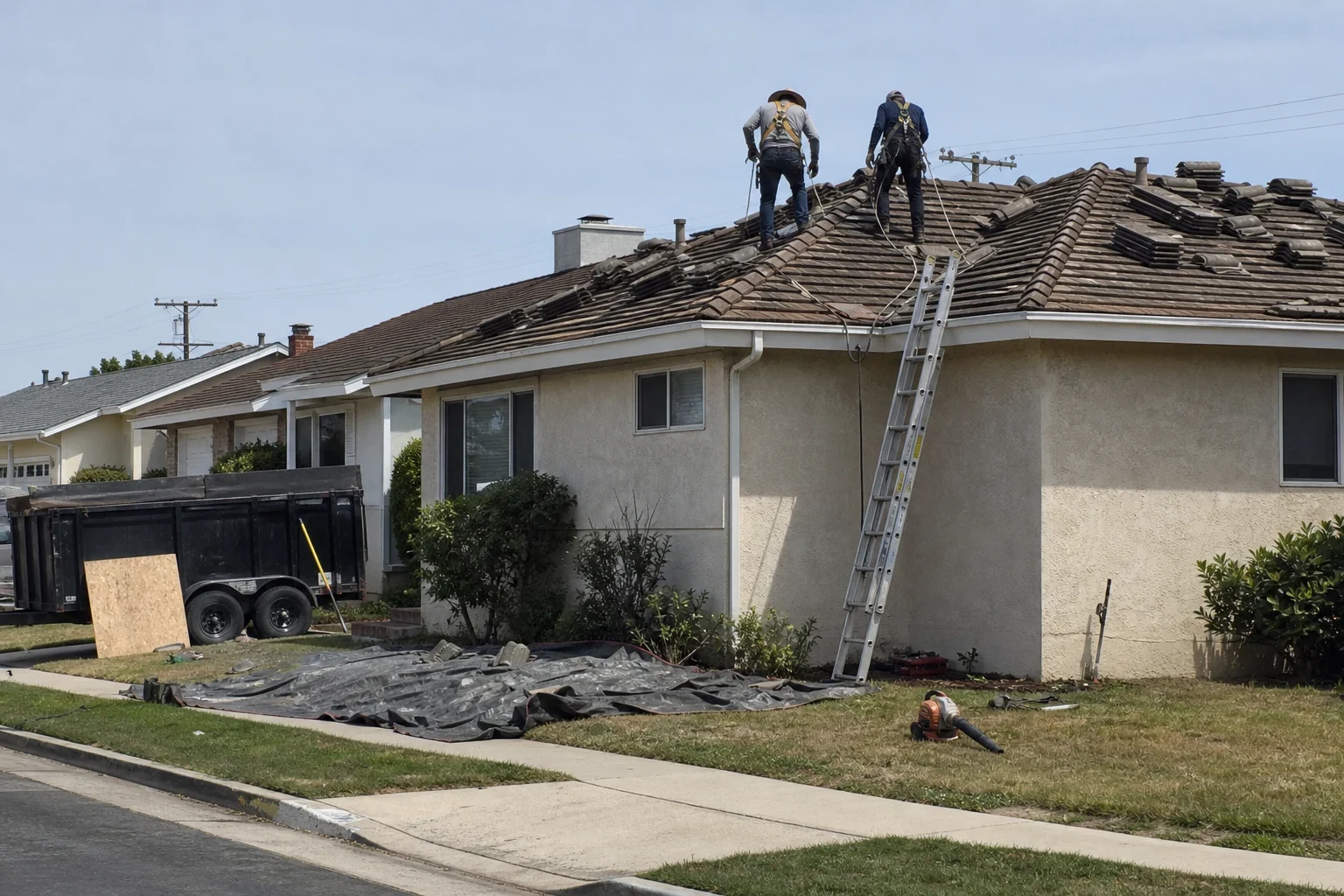
What Our Tile Work Covers
- 01
Lift and relay
We remove the field tile, stack it on the roof or a staging area, and replace the underlayment and battens beneath. Sound tiles go back in their original courses. Cracked ones are swapped for matching tile.
- 02
New underlayment
Old felt comes off down to the deck. We dry in with a heavier underlayment rated for tile, so the layer that actually keeps water out starts its life fresh instead of halfway through it.
- 03
Flashing and valley metal
Headwall, sidewall and pipe flashings are replaced, along with the metal in the valleys where two roof planes dump water together. Rusted or undersized valley metal is one of the most common sources of tile roof leaks.
- 04
Broken tile replacement
For roofs that only need spot repair, we lift the surrounding courses, slip in a matching tile and check the felt beneath while it is exposed. Concrete tile profiles change over the years, so we look for a close match before recommending anything else.
- 05
Hip, ridge and eave details
Ridge and hip tiles are reset, whether in mortar or on a ridge nailer, and bird stop is installed at the eaves to keep nesting birds and wind-blown debris from getting under the first course.
Questions about Tile Roofing?
Call(562) 374-8848Signs Your Tile Roof Needs Attention
A stain after the first winter rain
Dry months hide underlayment failure. When the first real storm arrives, water that gets past the tile runs through the cracked felt and shows up as a ceiling stain or a damp spot near an exterior wall.
Cracked or slipped tiles
A tile that has slid down a course or split across the middle leaves felt exposed to sun and rain. Foot traffic from other trades, like solar or antenna installers, is a frequent cause.
Brittle felt at the eaves
Look up under the first row of tile at the gutter line. If the black felt you can see is curled, torn or crumbling, the rest of the roof is usually in similar shape.
Loose or missing ridge mortar
Mortar at the ridge and hips cracks with age and lets wind lift the cap tiles. Chunks of mortar in the gutter are an early warning.
An original roof past 25 years
Even with no leak yet, felt of that age is near the end of its service life. A look underneath now lets you plan the relay instead of reacting to it.
How a Tile Job Runs
- 1
Free inspection
We walk the roof, stepping only where the tile is supported, and lift a few courses to see the underlayment and battens. You get photos of what we found and a plain answer on whether repair or relay makes sense.
- 2
Free written estimate and permit
The estimate lists each part of the job line by line: tile handling, underlayment, flashing, ridge work and any deck repair. For a relay or new roof, we pull the permit the city requires and schedule its inspections.
- 3
Tile off, roof dried in
Tiles are removed and stacked, old felt and rotted battens come off, and any damaged decking is replaced. New underlayment goes down the same day so your home is never left open to weather overnight.
- 4
Relay, flash and clean up
New flashing and battens go in, tile is set back course by course, and the ridge is rebuilt. We clear broken tile and felt scraps from the yard and gutters before the final walk-through with you.
What Sets the Price of Tile Work
Tile work is priced mostly by labor and by what we find under the tile, not by the tile itself. Your free written estimate breaks those pieces out so you can see where the money goes. Financing available through Service Finance Company, subject to credit approval.
- Repair, relay or new tile
- Replacing a handful of broken tiles is a small job. A full lift and relay reuses your tile but replaces everything beneath it, and a new tile roof adds the cost of new tile.
- Tile profile and availability
- Some older concrete tile profiles are no longer made. If replacements must come from salvage or a close-match product, that affects both price and how we plan the job.
- Deck and batten condition
- Long-term leaks rot plywood and battens. We cannot see all of it until the tile is off, so the estimate states how any added deck repair will be measured and priced.
- Roof shape and slope
- Valleys, hips, dormers and steep pitches mean more cutting, more flashing and slower tile handling than a simple gable roof.
Tile Roofing Questions
Can my existing tiles be reused?
Usually, yes. Concrete and clay tile often have decades of life left when the felt beneath has failed. We expect some breakage during removal and replace those pieces with matching tile, which the estimate accounts for.
Is it safe to walk on a tile roof?
Only if you know where to step. Tile cracks when weight lands on an unsupported spot, which is why we step at the lower edge of each tile over the batten. We'd suggest staying off it yourself and letting us look.
How long does tile underlayment last compared to the tile?
The tile typically far outlasts the felt under it. Older single-layer felt often needs replacing after roughly 20 to 30 years, depending on heat exposure and roof pitch. That gap is the reason lift and relay exists.
Will insurance cover my tile roof?
It depends on the cause. Sudden damage, like tiles broken by a fallen limb or wind, may be covered, while felt that has aged out generally is not. We work directly with your insurance claim and show the adjuster what we documented, but your carrier makes the coverage decision.
Can I switch from shingles to tile?
Sometimes. Tile is much heavier than asphalt shingle, so the rafters and deck have to be checked before we recommend it. If the framing was built for a lighter roof, we will tell you so and talk through the alternatives.
Find Out What Is Under Your Tile
We lift a few courses, photograph the underlayment and flashing, and tell you whether a repair or a relay is the right call. Se Habla Español (service in English and Spanish).