ServicesRoof Repair
Roof Repair in Los Alamitos That Starts With What Failed
Most roof problems begin at one weak point: a cracked concrete tile, a lifted shingle tab, a split pipe boot or a dried-out sealant joint. We locate that point, rebuild it with matching materials and give you an honest read on the condition of the roofing around it.
When a Repair Is the Right Call
A repair makes sense when the damage is limited and the roof around it is sound. If the underlayment is still pliable, the deck is solid and the failure is confined to one slope, one valley or one penetration, fixing it costs far less than a new roof and can buy real years of service.
Many homes around Los Alamitos were built in the 1950s and 1960s and have been reroofed since, often with tile laid over felt that is now brittle. On those roofs the tile can look fine while the paper beneath it has cracked. We lift tiles at the problem area to check, because that answer decides whether a repair will hold through the next winter rain.
If what we find points to roof replacement instead, we say so and show you the photos that led us there.
What Our Roof Repair Work Covers
- Flashing and pipe boots
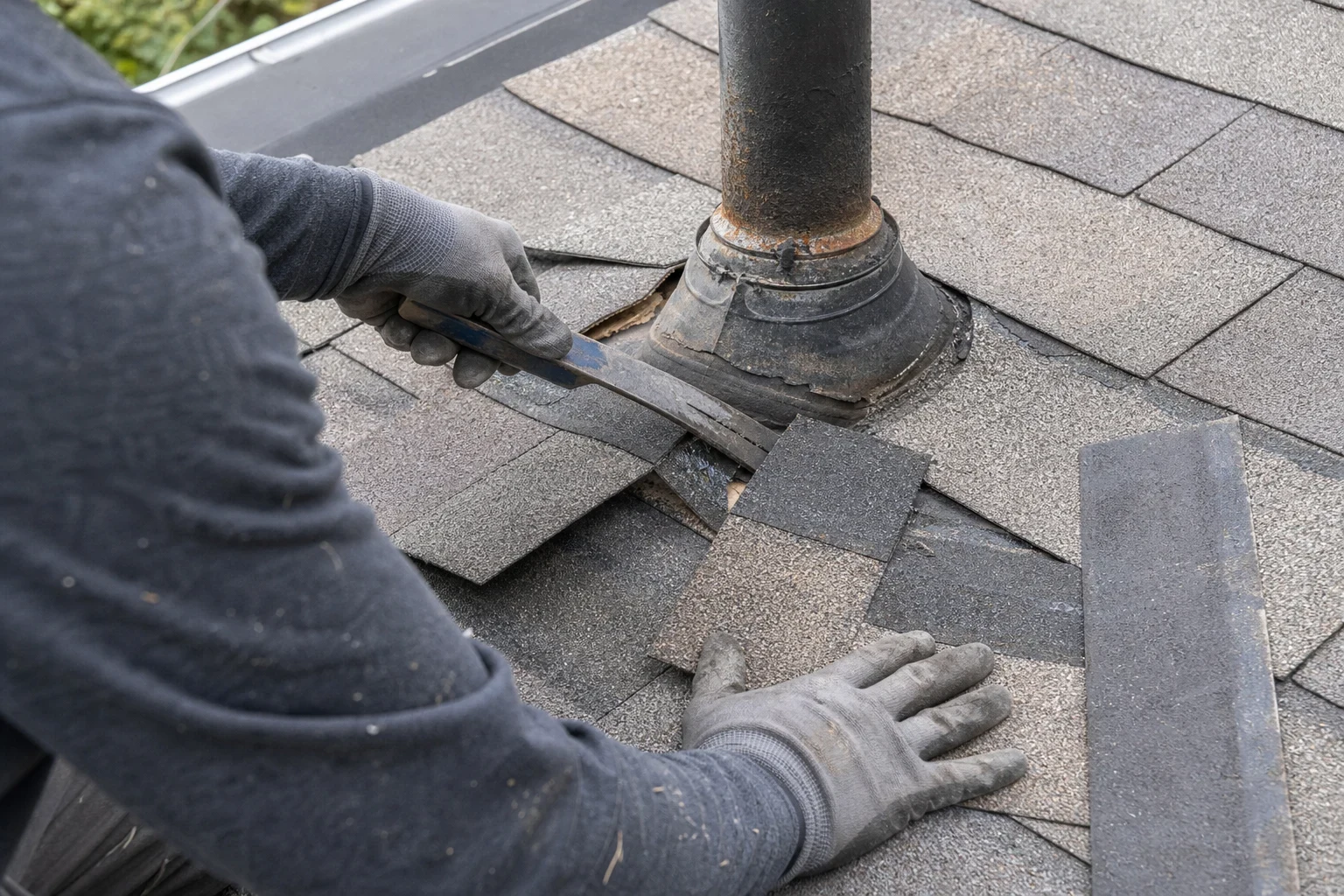
- We repair step flashing along sidewalls, counterflashing at chimneys and the boots around plumbing vents. Rubber pipe boots crack under years of sun, and a smear of mastic over the split rarely lasts a season. We replace the boot or fit a lead jack instead.
- Tile replacement and reset
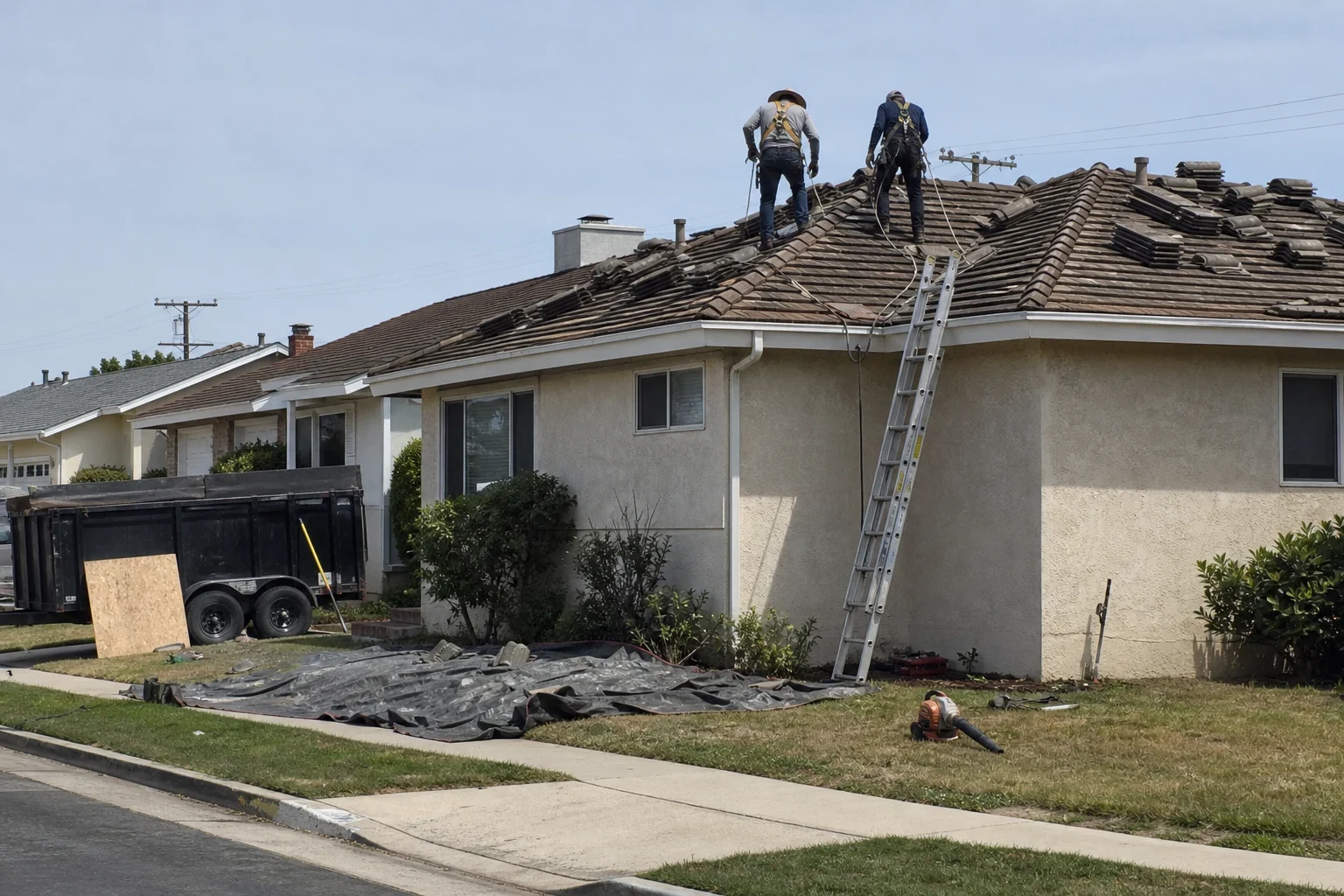
- Cracked or slipped concrete and clay tiles are replaced with matching profiles. Where the felt below is torn, we lift the surrounding courses, lap in new underlayment and relay the tile on fresh fasteners. More detail is on our Tile Roofing page.
- Shingle and ridge repairs
- Creased, lifted or missing shingles are replaced and hand-sealed, and loose hip and ridge caps are renailed so wind cannot peel them back.
- Deck and underlayment sections
- Soft or delaminated plywood around an old leak is cut back to solid framing and replaced. New underlayment is woven in so water sheds over the existing layers, never under them.
- Low-slope patches
- Blistered or split roll roofing over patios, porches and additions is cut out and patched with compatible material. Larger low-slope problems are covered on our Flat Roofing page.
Signs Your Roof Needs Repair
Stains on a ceiling or rafter
Brown rings on drywall or dark streaks on attic framing mean water has been getting past the roof covering. The stain is often a few feet downslope from the actual entry point.
Cracked or slipped tiles
A single broken tile exposes the felt to sun and rain. Felt left uncovered breaks down quickly, which turns a small fix into a larger one.
Lifted or missing shingles
Strong offshore winds in fall can break the seal strip on older shingles. Once a tab lifts, the nails beneath it are open to water.
Granules collecting in gutters
Shingles shed some granules early on, but heavy buildup on a roof past mid-life means the asphalt is exposed and aging faster.
Rusty nails or damp spots in the attic
Rusted nail tips and damp sheathing point to water or condensation reaching the deck. Both are worth tracing before they soften the plywood.
How a Repair Visit Runs
- 1
Free inspection with photos
We walk every slope, look closely at flashing and penetrations, and check the attic framing if there is a safe way in. The photos we hand over show the cause of the problem, not just the stain it left behind.
- 2
Free written estimate
The estimate lists each repair line by line: the materials, the area involved and anything that depends on what we find under the surface. Nothing is added later without your approval.
- 3
Repair day
We cover plants and walkways below the work area, remove the damaged material and inspect the deck underneath. Then we rebuild in order: decking, underlayment, flashing and the finished surface.
- 4
Check and cleanup
We water-test the repaired area where practical, sweep the ground with a magnet for nails and send you the after photos.
What Moves the Price of a Roof Repair
A repair is priced on what has failed and what it takes to reach it. We can only give a firm number after we have seen the roof, which is why the inspection comes first. Financing is available through Service Finance Company, subject to credit approval.
- Roofing material
- Tile repairs take more time than shingle work because surrounding tiles have to be lifted and relaid without breaking. Clay costs more to match than concrete.
- Damage under the surface
- Rotted decking or torn underlayment adds labor and material. We note this possibility on the estimate so it is not a surprise.
- Pitch, height and access
- A steep pitch or a two-story eave calls for extra fall protection and staging. A narrow walkway beside the house makes it slower to carry materials up and debris down.
- Matching older materials
- Discontinued tile profiles or shingle colors may need to be sourced from salvage or blended in from a less visible slope.
Roof Repair Questions
Something not covered here? (562) 374-8848
Can you match my existing tile or shingles?
Usually, yes. We bring samples to compare profile and color, and for discontinued tiles we look for salvage stock. When an exact match is not possible, we can move original tiles from a hidden slope to the visible repair and use the new ones out of sight.
Is a roof repair covered by homeowners insurance?
Coverage hinges on what caused the damage and how your policy is worded. Sudden wind or storm damage is often covered, while gradual wear and aging usually are not. We work directly with your insurance claim by supplying photos and a written scope, and the adjuster makes the final call on coverage.
How long will a repair last?
A repair to sound roofing can last as long as the materials around it. If the surrounding underlayment or shingles are near the end of their life, we tell you that up front so you can plan for roof replacement.
Does a roof repair need a city permit?
Small repairs generally do not. Larger sections of new decking or underlayment can fall under reroofing rules, and when the scope calls for a permit we pull it and schedule the inspection.
Should I wait until it rains to see if it leaks?
Better not. Our dry months are the easiest time to open a roof, and finding a split boot or cracked tile before the winter storms keeps water out of your ceiling. For an active drip, see our Roof Leak Repair page.
Have the Weak Spot Found Before the Next Rain
We will inspect the roof, photograph what failed and give you a written repair estimate at no cost. If repair is not the right answer, you will hear that from us too.