ServicesCommercial Roofing
Commercial Roofing in Los Alamitos
We repair and replace roofs on storefronts, offices, small warehouses and apartment buildings. Most of these are low-slope roofs, so we start where they fail: seams, drains, parapet flashing and the curbs around rooftop equipment. You get a written plan before any work begins.
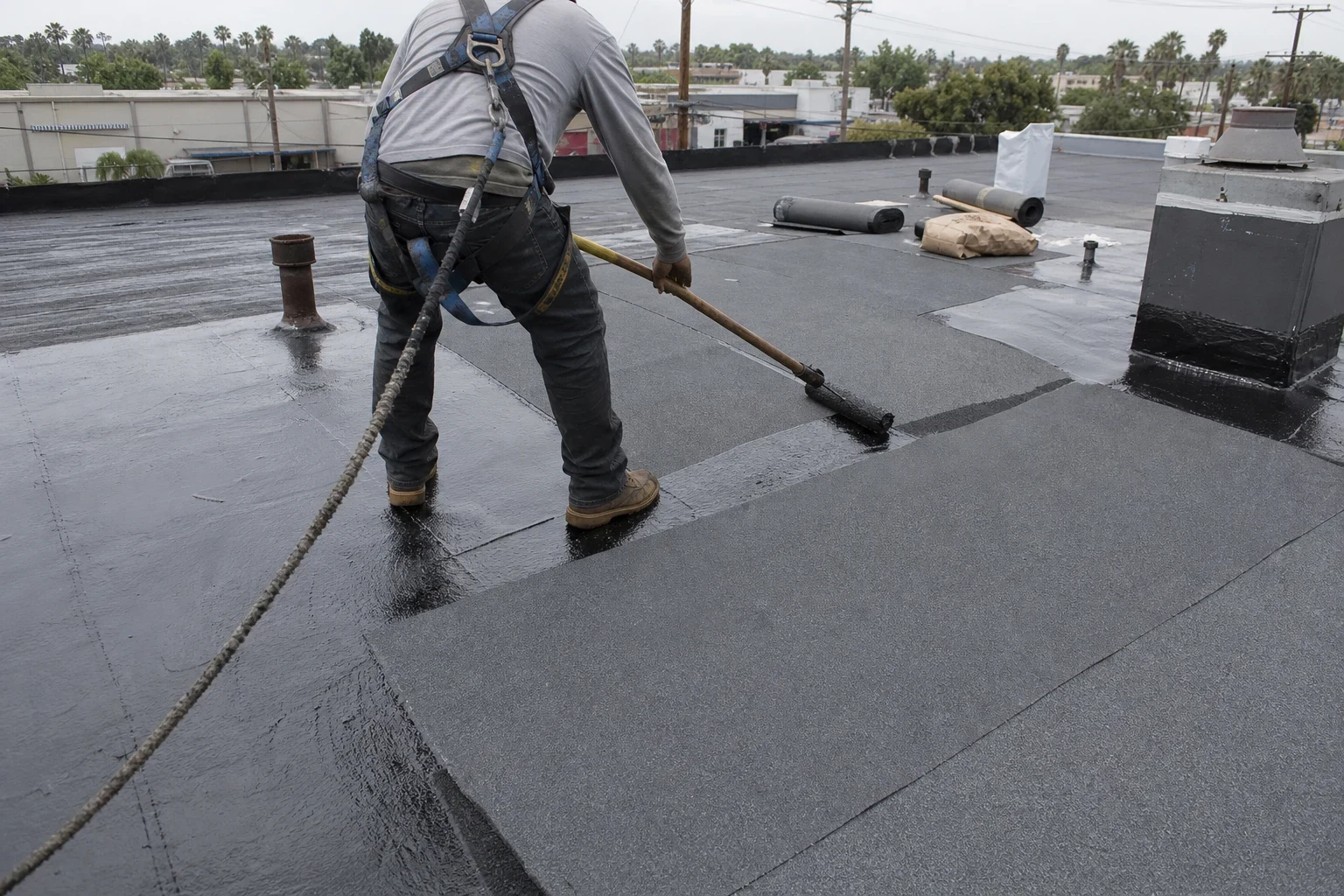
Low-slope roofs fail differently than pitched ones
A pitched shingle roof sheds water by gravity. A commercial roof with a quarter inch of fall per foot depends on the membrane staying continuous and the drains staying clear. When either one slips, water sits, finds a seam and travels sideways under the surface before it shows up on a ceiling tile thirty feet away.
Most commercial buildings around Los Alamitos and nearby Cypress and Seal Beach carry one of three systems: built-up roofing with a gravel surface, torch-down or self-adhered modified bitumen, or a single-ply membrane like TPO. Each ages in its own way. Built-up roofs blister and alligator as the asphalt dries out. Modified bitumen cracks at the laps. TPO holds up well in sun but depends entirely on its heat-welded seams.
We identify the system, find what is actually failing, and tell you whether a repair, a recover or a full tear-off makes sense for the building and your budget.
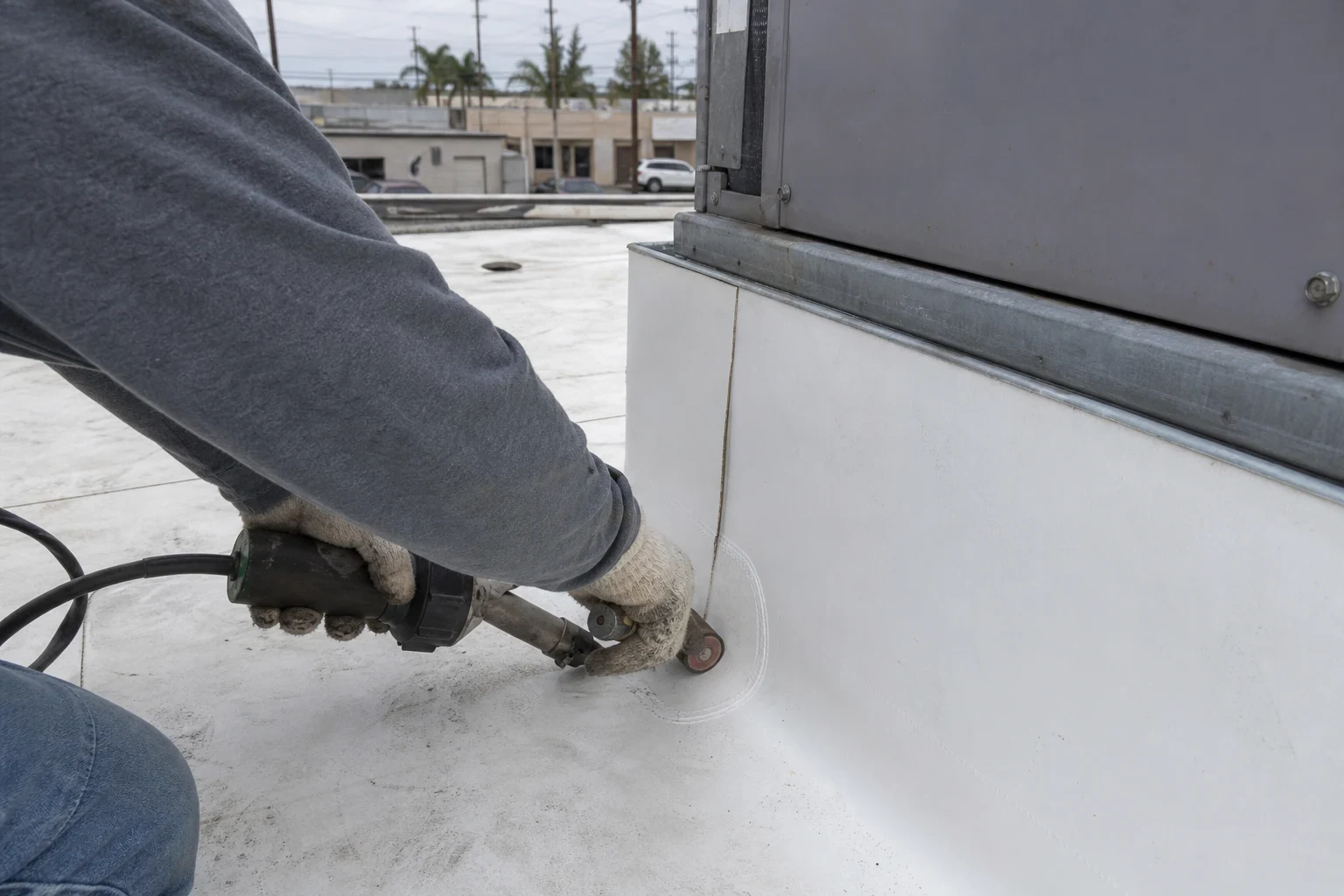
What our commercial roofing work covers
- 01
Membrane and seam repair
We patch splits, reweld open TPO seams and rebuild failed modified bitumen laps. Each repair is cleaned and primed so the new material bonds to sound surface instead of chalked or dirty membrane.
- 02
Drains, scuppers and gutters
Clogged roof drains and undersized scuppers cause most of the ponding we see. We clear strainers, reset drain flashing and check that overflow scuppers sit at the right height. Our Gutters page covers the downspout side.
- 03
Parapet and coping work
Parapet walls take water from both sides. We reseal coping joints, replace loose metal cap and rework the base flashing where the membrane turns up the wall.
- 04
Curbs and penetrations
HVAC curbs, vent stacks, conduit and skylights all puncture the roof. We reflash them properly instead of burying them in mastic that cracks within a season or two.
- 05
Recover or full replacement
If the deck and insulation are dry, a new membrane over the existing roof can be an option. If they are wet, we tear off to the deck so trapped moisture does not rot the new system from below.
Questions about Commercial Roofing?
Call(562) 374-8848Warning signs on a commercial roof
Puddles still there two days after rain
Water that stays more than 48 hours usually means a clogged drain, a sagging deck or flattened insulation. Ponded water also wears out the membrane faster.
Stained ceiling tiles
On a flat roof, the stain seldom lines up with the opening. A mark near a wall can often be traced to parapet flashing or a curb well away from it.
Bubbles or blisters in the roof
Moisture or air caught between layers swells in the afternoon heat and forms blisters. Small ones can be monitored, but once one breaks, water goes right in.
Gravel worn away in spots
Gravel on a built-up roof protects the asphalt from UV. Where it has blown or washed off, the asphalt dries out, cracks and begins to alligator.
Patch piled on patch
Thick roof cement built up around a unit or drain usually means the flashing under it was never properly repaired. Find out before the first winter storm arrives.
Steps in a commercial roof job
- 1
Full roof walk and core sample
We cover the entire roof, photograph the drains, seams and flashings, and where needed cut a small core to count the layers and check for wet insulation.
- 2
Itemized estimate and choices
We give you a free written estimate with each item on its own line. When both a repair and a replacement make sense, we price each so you can weigh them.
- 3
Permit and code check
On reroofs, we get the permit from the city building department. California's Title 24 energy code usually requires a rated cool roof surface when a low-slope commercial roof is replaced, and we choose a membrane that meets it.
- 4
A schedule that works for tenants
Together we set start times, staging spots and any loud tear-off days in advance, so customers and tenants can keep using the building. Debris goes in bins, never in your lot.
- 5
Last check and photo record
Where we can, we water-test the drains, then walk the finished membrane with you on the roof. You get close-up photos of every completed seam, curb and flashing detail to keep with your building records.
What sets the price of a commercial roof
Commercial roofs never price alike, since what sits under the membrane counts as much as the size. We base the price on what we measure and uncover on your roof, and every item goes in writing. Financing is available through Service Finance Company, subject to credit approval.
- Soaked insulation and deck damage
- Wet insulation must be removed, and damaged decking replaced, before a new roof goes on. A core sample shows us this before the work starts.
- How many roofs are already there
- Code caps the number of roofs a building can carry. Once that cap is hit, tear-off and disposal are added to the job.
- Which membrane
- TPO, modified bitumen and built-up roofs each have their own material and labor costs. Cool roof rules also limit which products can be used.
- Rooftop units and penetrations
- Each curb, pipe and skylight gets its own flashing. A roof packed with HVAC equipment takes longer than an open roof of equal size.
- Getting to the roof and timing
- Narrow alleys, lifting materials by crane, and after-hours work that lets a business stay open all add to the labor cost.
Questions From Building Owners
Is a recover possible, or does the old roof have to come off?
It depends. A recover can work if the current roof is dry, the deck is solid and the building is still under the layer limit. We take a core sample before suggesting it, since sealing in wet insulation holds moisture and cuts the new roof's life short.
Do I need to close my business while you work?
In most cases, no. Repairs are generally done while the building stays open. On replacements, we plan tear-off sections and loud work for times you pick, and we keep doors and parking open.
Will you work with insurance on a commercial claim?
Yes, we work directly with your insurance claim. We document the roof with dated photos and measured areas and explain what we found to the adjuster in plain language. Your insurer makes the coverage decision.
What membrane works best on buildings around here?
On most local low-slope replacements, white TPO is a good choice since it reflects heat and satisfies cool roof rules. Modified bitumen is still a sound pick where the roof sees a lot of foot traffic. We lay out the tradeoffs for your building, and our Flat Roofing page covers low-slope work on homes.
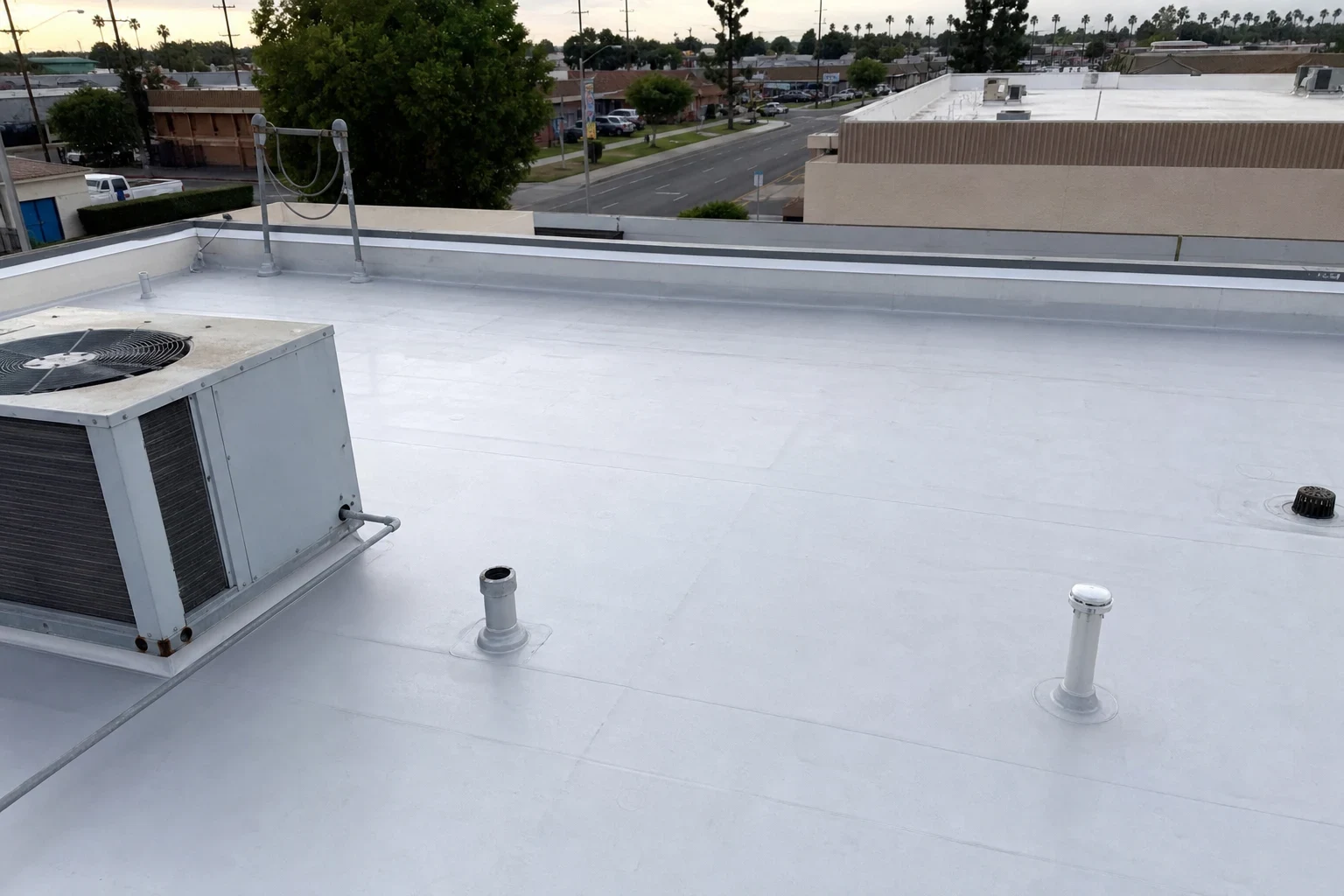
Find out what your roof actually needs
We will walk the roof, check the drains and flashings, and give you a written estimate with clear options. The inspection is free.