ServicesRoof Inspections
Roof Inspections in Los Alamitos
We get on your roof and check the parts that fail first: cracked or slipped tile, worn underlayment, lifted shingles, rusted flashing and clogged drainage. You get a clear account of what we found, what can wait and what can't, and the inspection itself costs nothing.
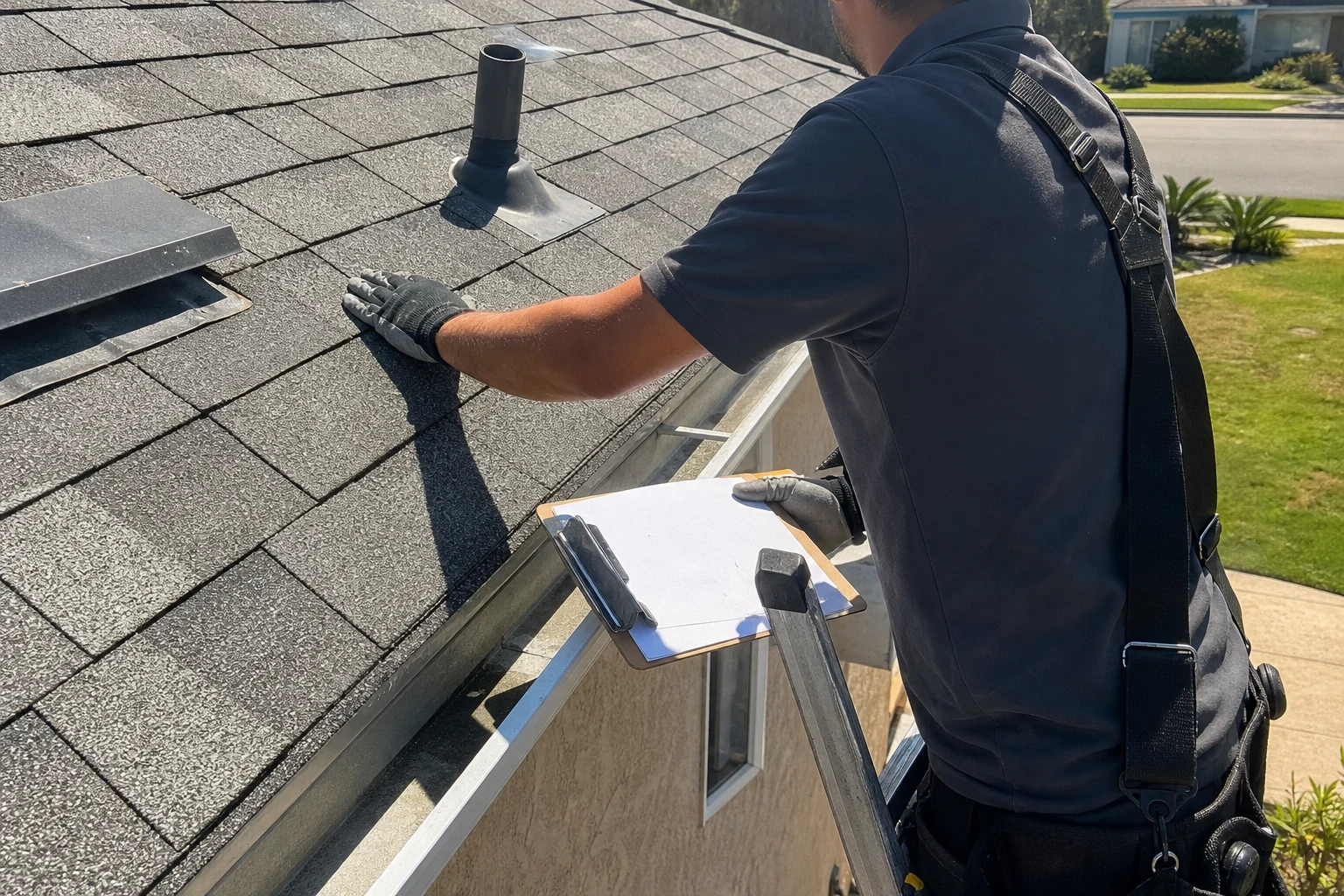
What a Roof Inspection Tells You
Most roof problems start small and out of sight. A tile slips an inch and exposes the underlayment to sun. A pipe boot cracks and lets water track along the decking. By the time a stain shows on the ceiling, the damage has usually been building for a season or two.
An inspection catches those problems while they are still repairs. We look at the roof the way water does, following every path it could take from the ridge to the gutter, and we check the attic side to see whether any of it has already gotten through.
Many homes around Los Alamitos still carry concrete tile or shingle roofs from decades ago, sometimes with patio covers and additions roofed later in different materials. Those transitions between old and new are where we spend extra time, because that is where leaks tend to begin.
The Parts of Your Roof We Look At
The roof surface itself
We watch for tiles that are cracked, broken or out of place, shingles that curl, blister or have lost granules, and nails working their way up. On tile we raise a few pieces to see the underlayment, because the tile turns away most water while the felt is what keeps the house dry.
Flashing and everything that pokes through
Metal flashing and boots seal chimneys, skylights, vent pipes and the joints where roof meets wall. We look for rust, raised edges, sealant that has dried out and split rubber, some of the most frequent leak sources we come across.
Underside of the deck
Up in the attic we check for water marks, light showing through the sheathing, plywood that is soft or peeling apart, and ventilation trouble like heavy condensation stains. That shows whether a roof problem has already reached the structure.
Lower-pitch areas
Patio covers, porches and additions often sit at a flatter pitch than the main roof. We look there for puddling, open seams and tired coating, since water that sits wears roofing down faster than water that runs off.
Gutters and water flow
We confirm the gutters slope toward the downspouts, the seams are tight and no debris is pushing water back under the roof edge. Gutters that overflow can rot fascia and drip edge within one rainy winter.
Photos and findings in writing
Everything we find is photographed, and we go through each item with you in order of urgency. When work is called for, a free written estimate lists every item on its own line.
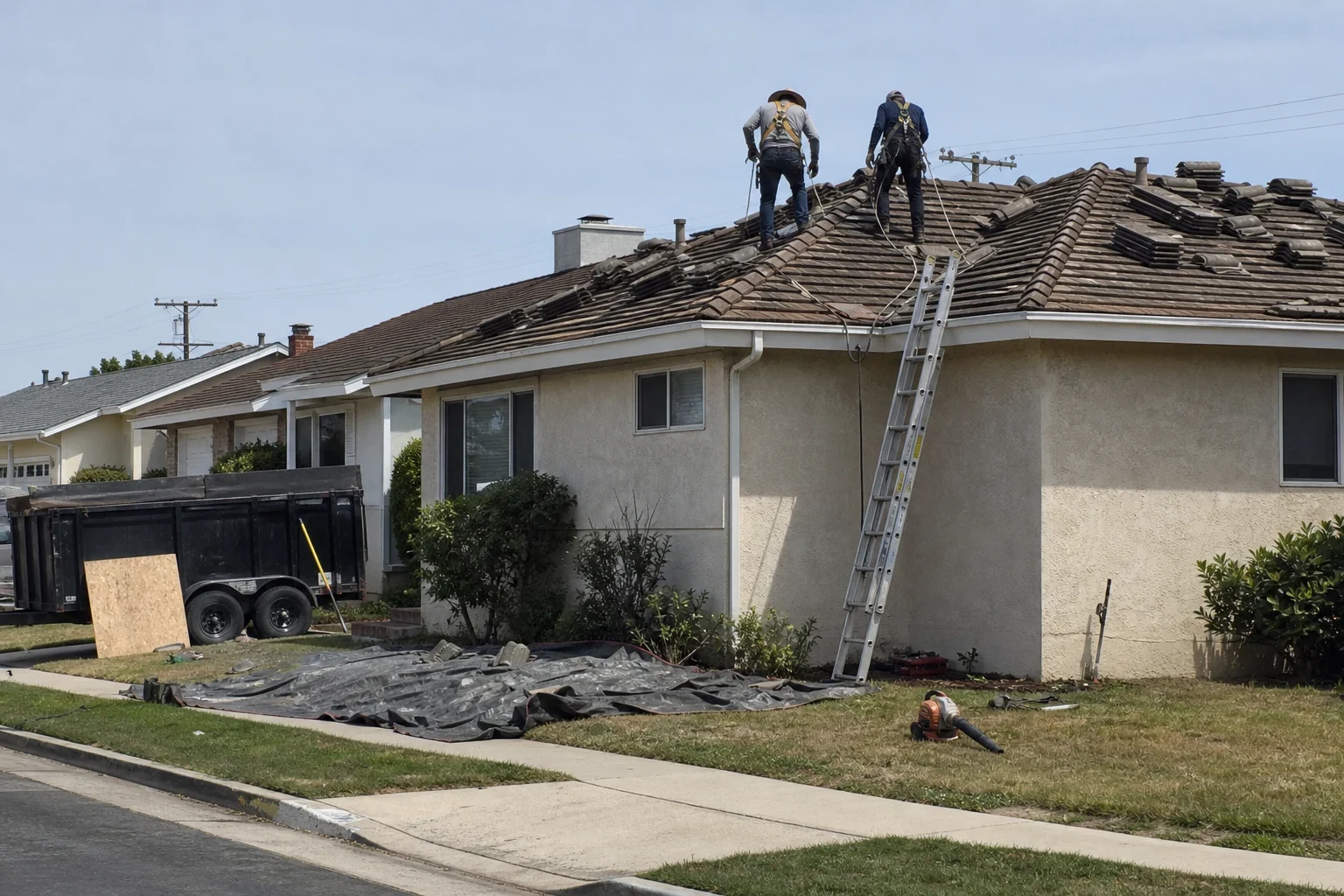
When to Have Your Roof Looked At
- Marks on a ceiling or wall
- A brown ring overhead or paint bubbling by a wall generally means water has been coming in for some time. The opening on the roof is often several feet away from the mark.
- Following a windstorm
- Santa Ana winds can raise shingle tabs and nudge tiles out of place with nothing visible from the yard. A check afterward finds the loose pieces before rain gets into the gap.
- Broken or crooked tiles you can see from below
- When a few damaged or misaligned tiles show from the ground, others usually hide out of view. Each one leaves underlayment open to sun it was never built to handle.
- Grit collecting in the gutters
- Aging shingles drop their mineral granules. A thick layer in the gutters or by a downspout means the asphalt beneath is losing its cover.
- A sale, purchase or project ahead
- Before you sell, buy or remodel, an inspection shows how much life the roof has left. It also lets you set money aside for roof repair or roof replacement when it suits you.
How the Inspection Goes
- 1
A phone call to schedule
You tell us what you've noticed and how old the roof is, if you know. We set a time that works for you, and we can talk it through in English or Spanish.
- 2
Ground and perimeter check
We start from the yard, looking at rooflines for sagging, checking gutters and downspouts, and noting fascia or eave damage.
- 3
On the roof
We walk the roof carefully, stepping on tile only where it can bear weight, and check the covering, flashing, vents and any low-slope areas. Every problem gets photographed.
- 4
In the attic
With your permission we check the underside of the decking for moisture, staining and ventilation issues.
- 5
Findings and next steps
We go over the photos with you, explain what each issue means and how urgent it is, and give you a written estimate if anything needs work. There is no pressure to book anything that day.
What Sets the Price of a Repair
You pay nothing for the inspection. When it turns up work to do, what that work costs depends on your roof and what sits under the surface. Each item goes into a free written estimate, and financing is available through Service Finance Company, subject to credit approval.
- What the roof is made of
- Swapping a few concrete tiles is priced differently from resealing shingles or recoating a flat area. Finding a tile profile that is no longer made can mean extra time tracking it down.
- How far the damage goes
- One cracked vent boot is a quick fix. Underlayment that has given out over an entire slope means taking up and relaying tile across a much bigger area.
- Shape of the plywood
- Plywood that water has softened must be swapped out before the roof can be sealed back up.
- Steepness and reach
- A steep pitch, a second story or a narrow side yard calls for more time and safety setup than a low one-story roof.
Common Questions About Inspections
- How much time does an inspection take?
- For most houses, around an hour, a bit more when there are several roof sections or the attic is awkward to get into. We take our time in the attic and at the flashing, because that's where we learn the most.
- Could you crack my tile by walking on it?
- Tile breaks when weight lands in the wrong place, so we only step on the lower overlap where each tile has support underneath. Should one break while we're up there, we'll show it to you and say so.
- Does someone have to be home?
- It's best if someone can let us into the attic and look at the photos with us afterward. If nobody can be there, we'll inspect the outside and review what we found with you over the phone.
- What happens if the roof is in good shape?
- We'll say exactly that. A roof with no problems is good news, and we'll give you a rough idea of what to keep an eye on as it gets older.
- Will you assist with an insurance claim?
- Yes. When we find wind or storm damage, our photos and written findings serve as your documentation, and we work directly with your insurance claim. Your adjuster decides on coverage, and we explain each stage along the way.
- How often should someone check my roof?
- Every few years is fine for a roof in good condition, moving to yearly as it ages. A check also makes sense after a big windstorm, or ahead of the winter rains if you've had trouble before.
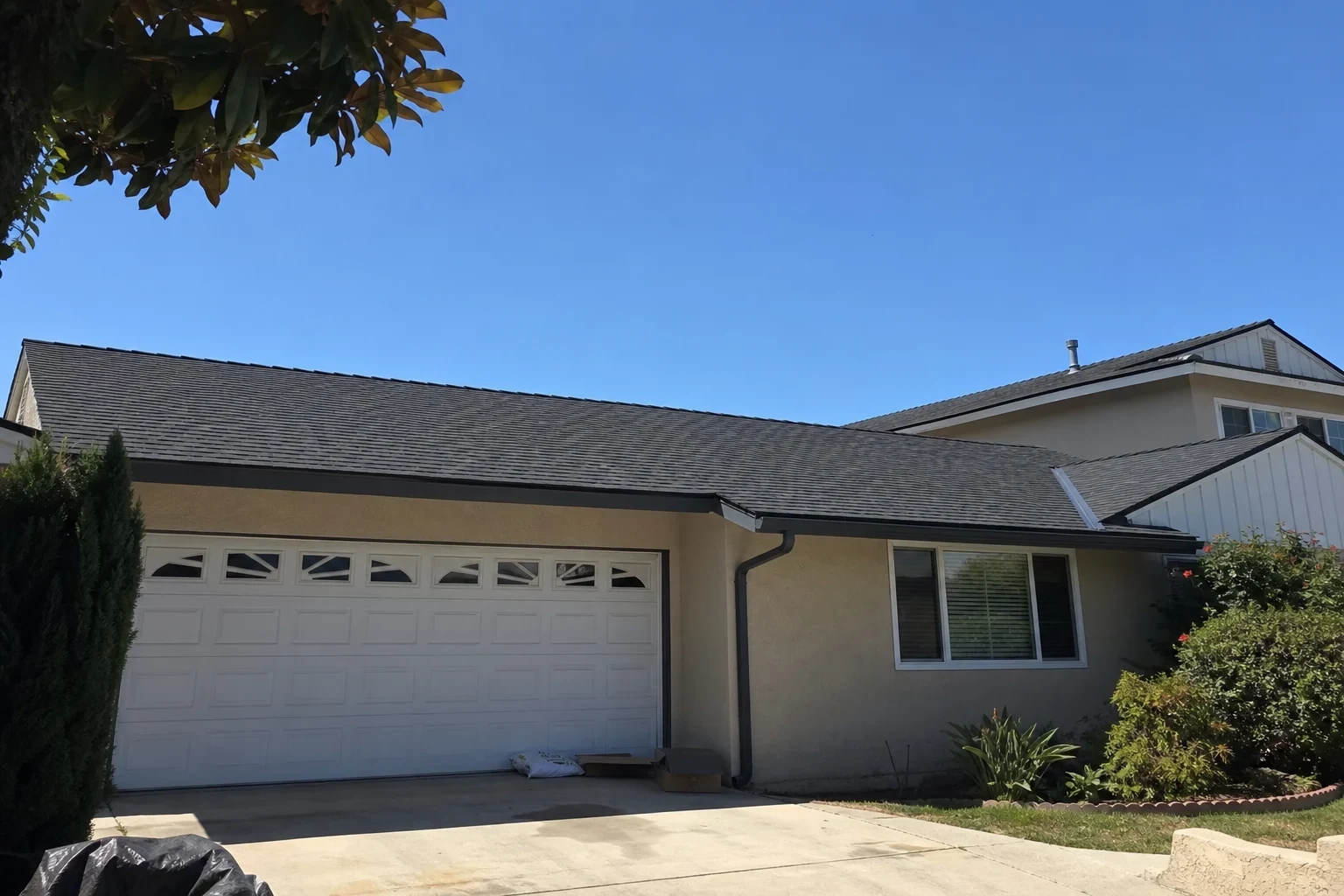
Find Out What Your Roof Needs
We'll check the covering, flashing, attic and gutters, then show you exactly what we found. Neighbors in Rossmoor, Cypress and Seal Beach can get the same visit.