ServicesRoof Replacement
Roof Replacement in Los Alamitos With Every Layer Renewed
Once wear has spread across every slope, we take your roof down to bare sheathing, repair the wood and install new underlayment, metal flashing and attic vents. You get a line-item written estimate, the permit filed for you and a roof made for hard summer sun and winter storms.
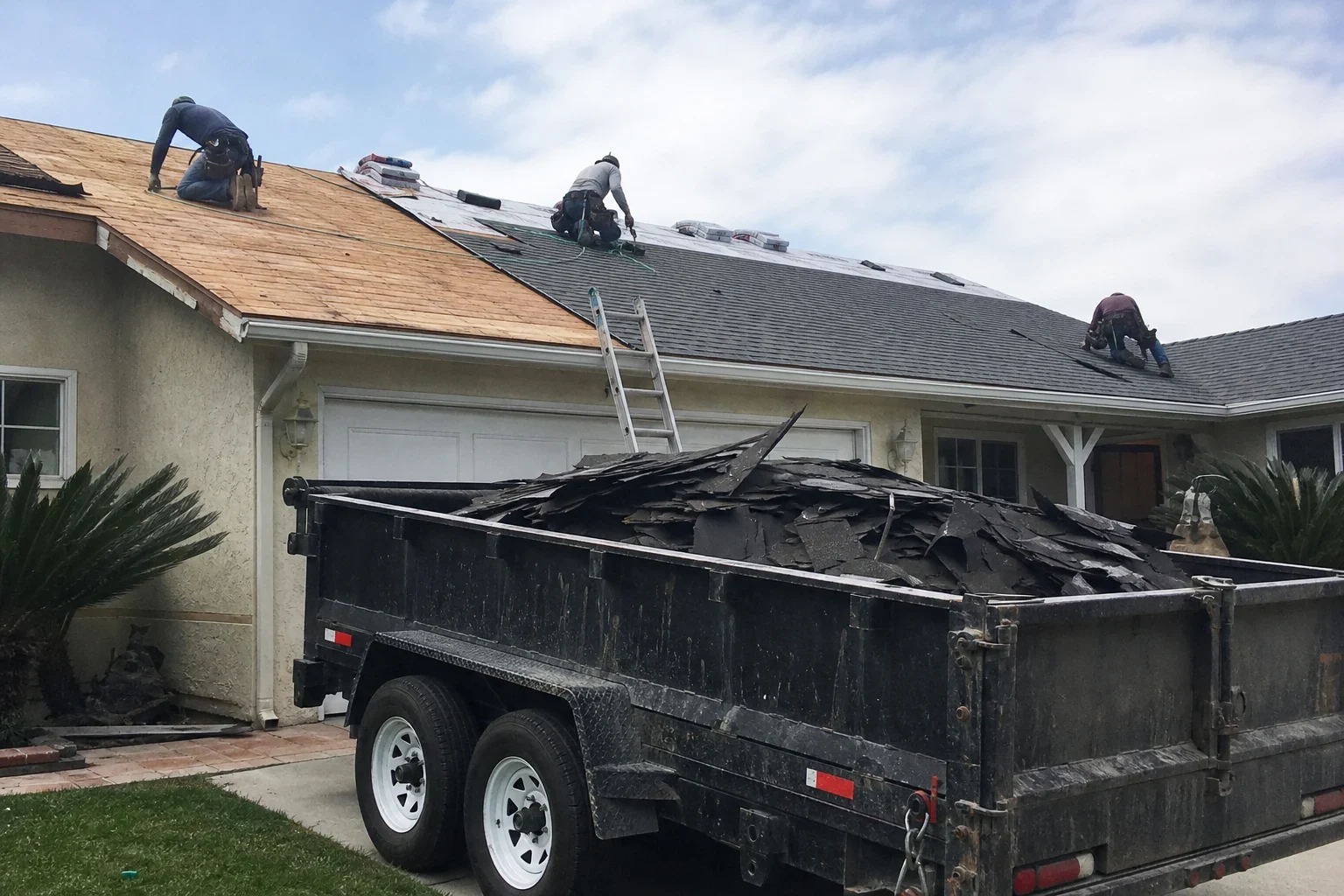
Replacement or one more repair
We recommend a new roof when the failure is spread across the system instead of sitting in one spot. Asphalt shingles worn bare of granules, concrete tile resting on felt that has dried out and torn, or a low-slope area carrying patch over patch are all signs the materials have run their course. A repair on a roof like that holds for a season, maybe two.
Plenty of homes in Los Alamitos were built in the 1950s and 1960s, and some still have spaced board sheathing that was installed under the original wood shakes. Shingle nails need solid wood to grip, so we look for those gaps during the inspection and put any new plywood on the estimate up front, before a single shingle comes off.
When a repair will hold, we say so plainly. Our Roof Repair page covers that work, and the inspection photos show you why we lean one way or the other.
What goes into your new roof
Stripping to bare sheathing
Every old layer comes off, down to the felt and the last nail, so the wood is exposed and we can judge it. Stacking new shingles on old ones buries any rot and loads the rafters with weight they were never designed to carry.
Sheathing repair and solid decking
Plywood that is soft, peeling apart or dark with water stains gets cut out and replaced. On homes with spaced boards, we sheath the whole roof in solid panels.
Underlayment and ice-and-water membrane
A synthetic underlayment covers the full deck. Self-adhering membrane is added along the eaves, through the valleys and around every pipe, because those are the spots where water pools and wind-driven rain gets pushed uphill.
Fresh metal and attic airflow
Drip edge, step flashing, valley metal and pipe boots are all new, never reused. We balance intake vents at the eaves with exhaust near the ridge so summer heat leaves the attic instead of cooking the shingles from below.
The right material for your home
We install asphalt shingles, concrete and clay tile, and low-slope systems for flat areas over patios and additions. Our Tile Roofing, Asphalt Shingle Roofing and Flat Roofing pages go into each one.
Permit, inspections and a clean yard
We file the building permit and book the city inspections. Each evening the crew rolls a magnetic sweeper across the lawn and driveway to pick up stray nails.
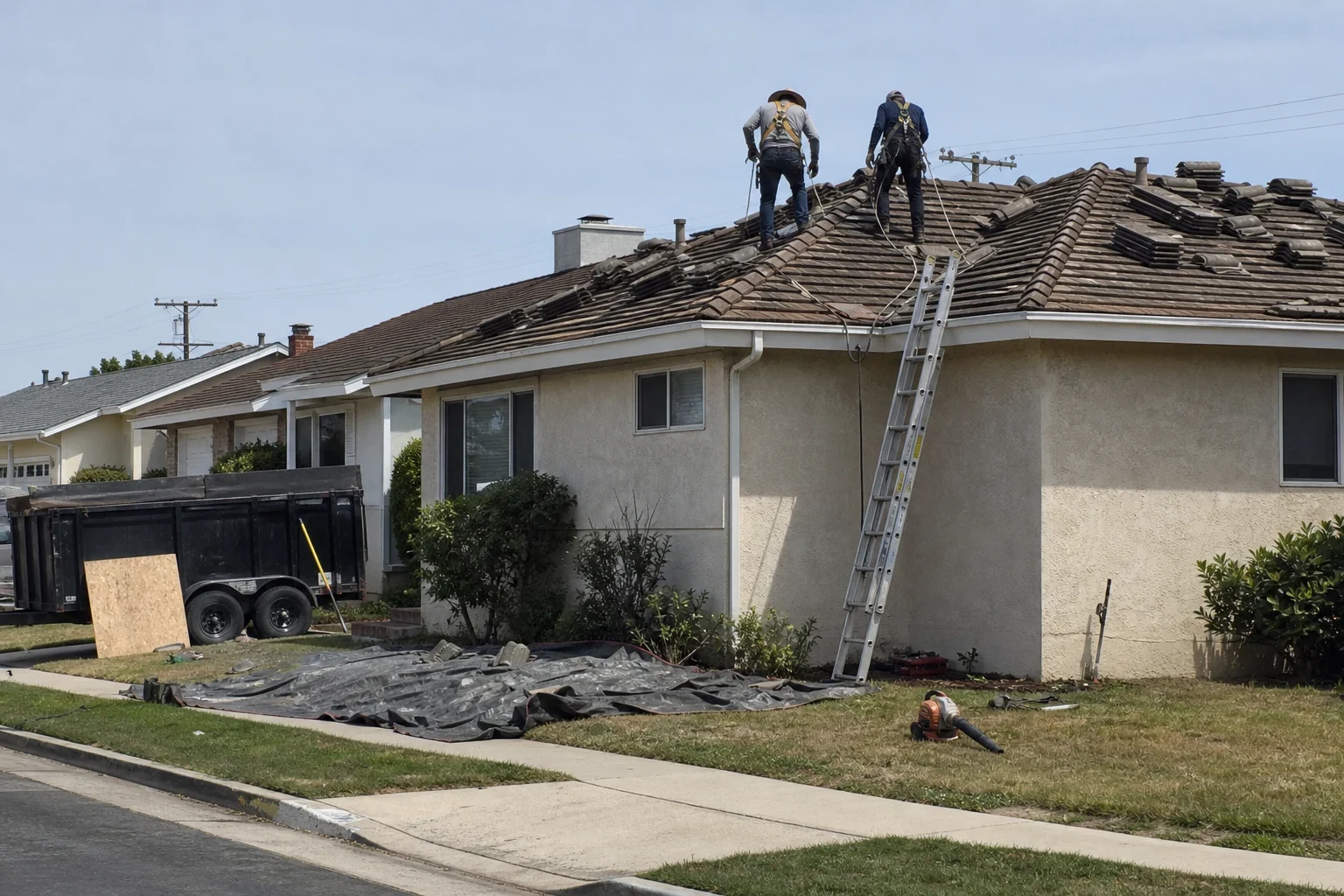
Signs your roof needs replacing, not patching
- Granules in the gutters
- Sand-like grit at the downspouts means shingles have lost their UV protection. Bare asphalt dries, cracks and curls quickly in direct sun.
- Curling or cracked shingles across a slope
- Lifted edges let wind get under the shingle. When many are doing it, sealing them one at a time will not last.
- Stains in more than one room
- Leaks in several ceilings usually mean the underlayment has failed, not a single shingle. That layer is what really keeps water out, and replacing it means lifting everything above it.
- Tile that looks fine but leaks
- Concrete tile often outlasts the felt beneath it by decades. The fix is lifting the tile, replacing the membrane and battens, and relaying the good tiles.
- Soft spots or a sagging line
- A dip between rafters or a spongy feel underfoot means the deck has taken on water. It should be dealt with before the next rainy season.
How the job unfolds
- 1
Roof walk and line-item estimate
We go over every slope, look into the attic where it is reachable and take photos of the problem areas. Then you receive a free written estimate that breaks out tear-off, decking, materials and the permit.
- 2
Paperwork and a start date
Our office files the permit while materials are ordered. We pick a start day with a dry forecast and let you know which cars and items to clear from the driveway.
- 3
Stripping the roof in stages
Plants and siding get covered with tarps, and the dump trailer is parked near the eaves. The crew strips one section, lays underlayment over it and only then moves to the next, so no part of your home sits exposed overnight.
- 4
Building the new roof and passing inspection
Flashing, vents and the roofing itself go down following the manufacturer's installation instructions. A city inspector reviews the work at each stage the permit calls for.
- 5
Walk-through and last sweep
Together we look over the roof and the yard, go through photos of the deck repairs and run the magnet one final time.
What sets the price of a new roof
We price each replacement from your roof's measurements and what the inspection uncovers, not from a generic chart. The items below move the number the most. Financing is available through Service Finance Company, subject to credit approval.
- Roof area and steepness
- Roofers count area in squares, and one square covers a 10-by-10-foot patch. A steep pitch calls for extra safety gear and a slower pace.
- Material choice
- Shingles, concrete tile, clay tile and low-slope membranes differ in material cost, weight and labor. Switching from tile to shingles, or the reverse, can change flashing and framing needs.
- Deck condition
- Replacing rotted plywood or sheathing over spaced boards adds material and labor. It appears as its own line on your estimate.
- Layers coming off
- Two layers of old shingles, or heavy tile, take longer to remove and weigh more at the dump.
- Roof details and access
- Chimneys, skylights, several roof levels and narrow side yards all add time on the job.
Roof replacement questions
- Can you put a new roof over my old one?
- We don't recommend it. An overlay hides the deck, so soft plywood or spaced boards stay under your new roof. A full tear-off also lets us replace all the flashing and underlayment instead of tying new materials into old ones.
- How long does a replacement take?
- A typical single-story shingle roof is usually torn off and covered within the first day or two, with the rest finished over the following days. Tile and multi-level roofs take longer. We give you a schedule with the estimate and adjust if rain moves in.
- Does homeowners insurance cover a new roof?
- Coverage usually applies to sudden events such as a windstorm, while gradual aging is typically excluded. We work directly with your insurance claim: we photograph the damage, write up what we found and can be on site when the adjuster visits. The final coverage decision belongs to your insurer.
- Does a roof replacement need a permit?
- Yes. We pull the building permit as part of the job and arrange the inspections, so you don't have to deal with the paperwork.
- Do I need to be home, and how should I prepare?
- You don't need to be home the whole time, but we need access to the driveway and side yards. Hammering carries through the ceiling, so take down pictures and fragile items on walls under the roof, and keep pets indoors or away.
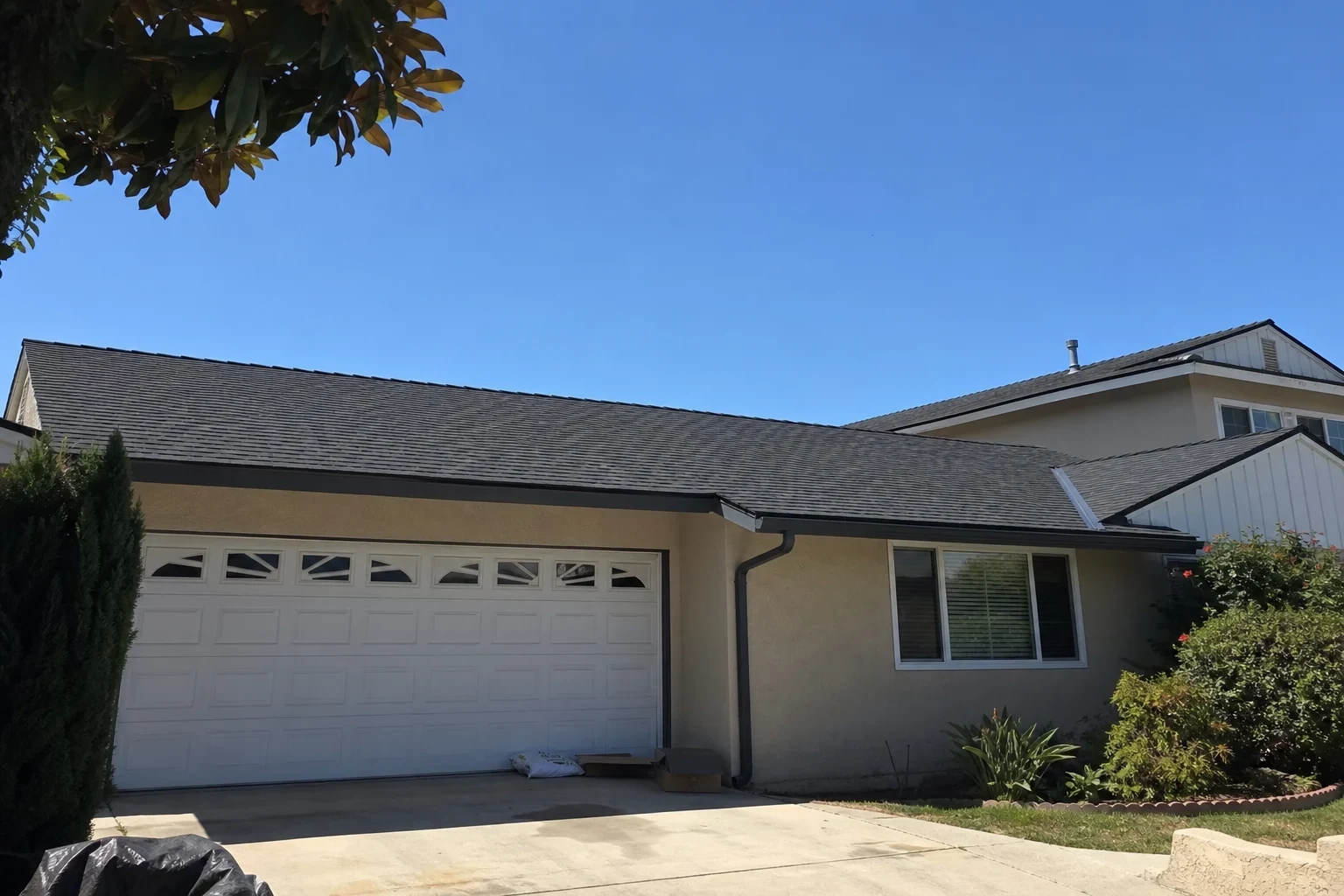
Find out what your roof really needs
We'll inspect it, photograph the deck and underlayment, and leave you a free written estimate. We work with homeowners across Los Alamitos and nearby towns from Cypress to Seal Beach.