ServicesStorm Damage Repair
Storm Damage Repair in Los Alamitos
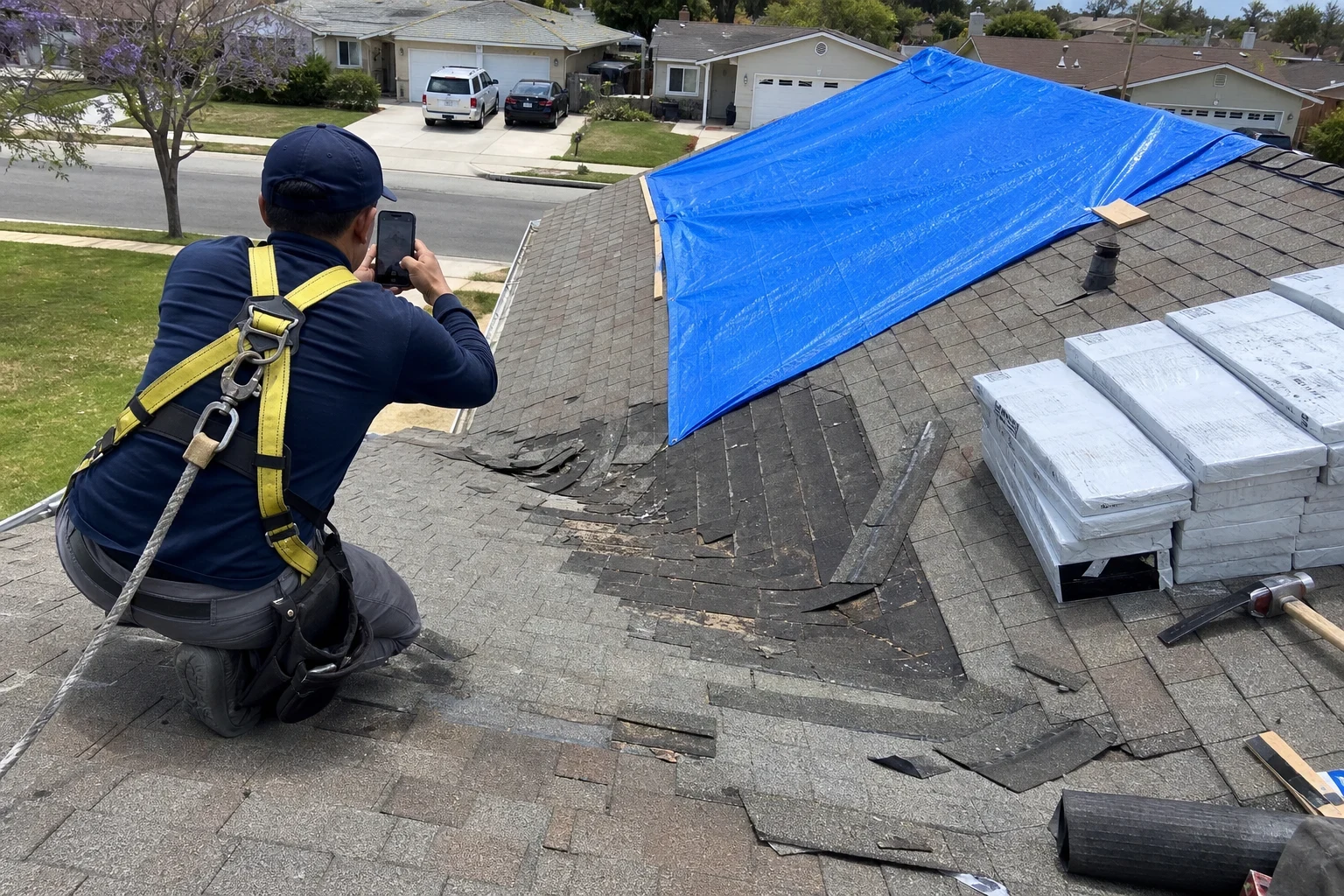
After wind and heavy rain, the damage that matters is often what you can't see from the yard: unsealed shingles, cracked tiles, lifted flashing. We inspect your roof for free, photograph every problem and repair it so the next storm doesn't find the same weak spots.
What storm damage repair covers on your home
Storm damage is harm to your roof from a single weather event: high wind, a falling limb, wind-driven rain or the occasional hailstorm. It differs from wear because it happens all at once. That distinction matters for your insurance policy, which usually covers sudden damage but not gradual aging.
Around Los Alamitos, the roofs we see most are asphalt shingle and concrete tile on homes built in the 1950s and 1960s, many with a low-slope section over a patio or addition. Each fails differently in a storm. Shingles lose their adhesive bond and crease at the nail line. Tile cracks or slips, and wind-driven rain then reaches underlayment that may already be decades old.
Our job is to separate storm damage from old wear, fix what the storm caused and tell you plainly when an aging roof is the bigger issue. If hail was part of it, our Hail Damage Repair page covers that work in more detail.
What the work includes
Shingle and ridge cap replacement
We replace creased, torn or missing shingles and hand-seal neighboring tabs whose adhesive strip let go. Ridge and hip caps get the same attention, since they take the most wind.
Cracked and slipped tile
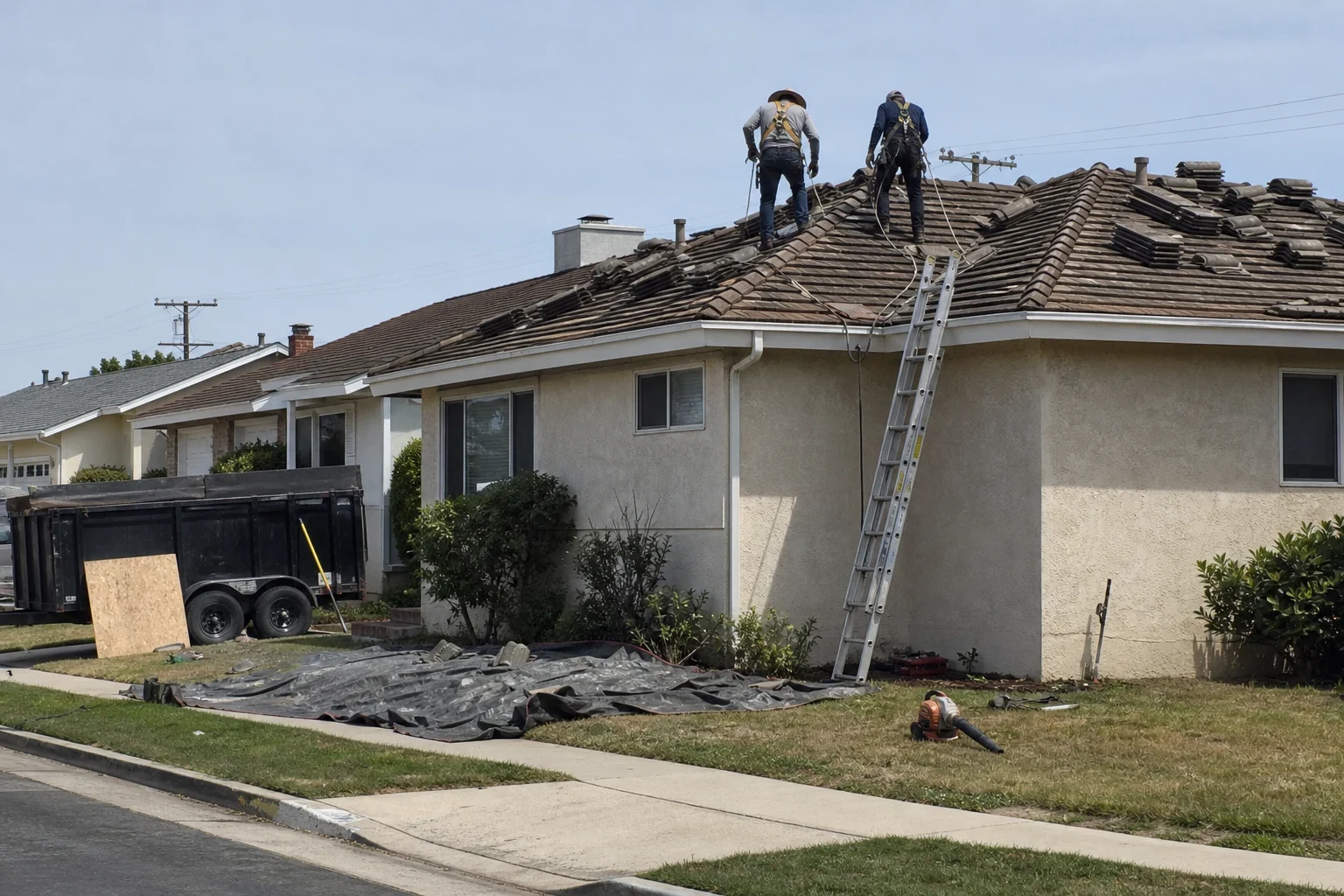
Broken concrete or clay tiles are swapped for matching pieces where available, and slipped tiles are reset on their battens. We check the underlayment beneath before closing the area back up.
Flashing and roof penetrations
Wind can peel back step flashing, lift a drip edge or crack the rubber boot on a plumbing vent. We refasten or replace these parts, because they are where most storm leaks actually start.
Underlayment and decking
Where water got through, we open the area, replace soaked felt or synthetic underlayment and cut out any plywood or plank decking that has gone soft.
Gutter and valley cleanout
Branches, palm fronds and grit clog gutters and valleys after a storm. We clear them and reattach loose gutter sections so water drains off your home as designed.
Before and after photos
You get photos of each damaged area before and after repair. That is the record an insurance adjuster will want to see.
Signs your roof took storm damage
- Shingle pieces in the yard
- Even one or two pieces on the ground mean tabs elsewhere may be lifted and unsealed, even if they now lie flat.
- Cracked or shifted tiles
- From the ground, look for a broken line in the rows, a tile sitting crooked or gaps along the ridge where mortar fell away.
- Fresh water spots on the ceiling
- A stain that appears right after heavy rain is most often a flashing or underlayment failure. Water tends to travel along a rafter before it drips, so the spot inside can be several feet from the actual opening in the roof.
- Bent drip edge or loose gutters
- Bent metal edges or gutters pulling away from the fascia show the wind got a grip on the roof's perimeter.
- Granules piling at downspouts
- A sudden pile of sand-like granules after one storm suggests shingles were scuffed by flying debris or hail.
How a storm repair job runs
- 1
Free inspection, roof and attic
We walk the roof, check the attic for stained sheathing and wet insulation, and photograph each problem. You hear what we found before anything is quoted.
- 2
Written estimate and claim support
You get a free written estimate that separates storm damage from existing wear. We work directly with your insurance claim and can meet the adjuster, while the coverage decision stays between you and your insurer.
- 3
Temporary protection if needed
If repairs can't start right away, we tarp open areas and secure loose material so rain stays out while the claim moves forward.
- 4
Permit and repair
When the work is large enough to need a city permit, we pull it. Then we make the repairs, matching shingle or tile as closely as current products allow.
- 5
Cleanup and final photos
We magnet-sweep for nails, haul off the debris and hand you the after photos for your records and your insurer.
What moves the cost of storm repairs
No two storm repairs price the same, because the damage you can see is only part of the job. We price from what we find on the roof and in the attic, and the written estimate lists each item so you can compare it with your insurance scope. Financing is available through Service Finance Company, subject to credit approval.
- Roofing material
- Matching an older concrete tile profile or a discontinued shingle color takes more sourcing than standard product. Tile also takes longer because each piece is set by hand.
- Hidden water damage
- Soaked underlayment or soft decking only shows once the roof is opened. We photograph it and explain it before it goes on the job.
- Where the damage sits
- A few shingles on an open slope is quick work. Damage around a chimney, skylight or valley needs more flashing and more time.
- Permits and code details
- Larger repairs may need a permit, and current code can call for details an older roof never had, such as drip edge or updated venting.
- Pitch and access
- Steep slopes and second stories need more safety setup, which adds labor.
Storm damage questions
- Will my homeowners insurance pay for storm damage?
- Most policies cover sudden damage from wind or falling debris, minus your deductible, but not wear from age. Our photos and written estimate help show which is which. We work directly with your claim, though your insurer makes the coverage decision.
- Is it better to have the roof looked at before I file a claim?
- For most people, yes. A free inspection tells you how big the repair really is and whether its cost lands above or below your deductible. If it falls below, covering it yourself can be simpler than opening a claim. If it lands above, you go to your insurer with photos and a written estimate already in hand.
- Can you match my existing tile or shingles?
- Often, yes. Many concrete tile profiles from the 1950s and 1960s are still made or can be found salvaged, and shingle lines keep similar colors over the years. When an exact match isn't available, we show you the closest options before anything is installed.
- Nothing seems missing up there. Can wind still have hurt my shingles?
- It can. A strong gust breaks the adhesive bond under a shingle tab, and the tab drops back into place looking untouched. Without that seal, every windy day after lifts it again until it creases at the nail line or tears away. We check tabs by hand on the roof, because that is the only reliable way to find them.
- When is a storm repair not enough?
- If the damage sits on a roof near the end of its life, patching may only buy a season or two. We'll tell you that plainly, and our Roof Replacement page explains what that work involves.
Find out what the storm did to your roof
We'll inspect, photograph and explain the damage, then give you a written estimate at no cost. Service in English and Spanish.